
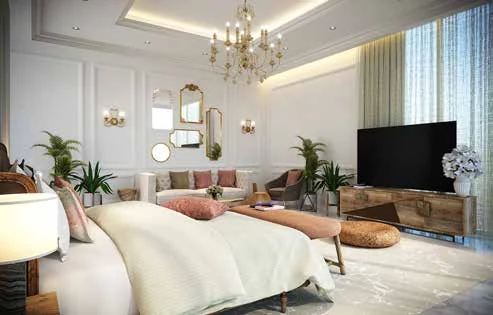
Start with the atmosphere
Before choosing a finish, think about the feeling you want a room to create. A quiet bedroom, an inviting reception and a lively dining room ask different things of colour, texture and light. Describe that atmosphere in a few clear words, then use them to guide the material palette.
Build a palette, not a collection
Choose a small group of materials that work together. Timber can bring warmth, stone can introduce structure and textiles can soften the space. Looking at real samples side by side helps reveal relationships that are easy to miss on a screen.
Think about everyday life
A beautiful finish needs to suit the way the space is used. Ask about cleaning, maintenance, wear and replacement. Where possible, consider samples in the lighting conditions of the actual room before making a final selection.
Let the details connect
The point where two materials meet deserves as much attention as either material on its own. Edges, proportions and transitions help turn separate choices into a coherent interior. Resolve these details during design development so the intention can carry through to implementation.